
If you work in an office, chances are your back has complained at some point. Studies show that up to 90% of professionals experience lower back pain due to long sitting hours, poor posture, and lack of movement. It’s so common that back pain is now one of the leading causes of missed workdays worldwide.
But here’s the good news: you don’t need fancy equipment or long workouts to protect your spine. With simple practices integrated into your day, you can prevent back pain, reduce stiffness, and even begin to heal existing discomfort.
Why Sitting hurts the Spine
- Posture Collapse: Slouching forward compresses the lower back and strains the neck.
- Lack of Movement: Sitting for hours reduces circulation, weakens back muscles, and stiffens joints.
- Screen Stress: Leaning toward laptops or phones creates “tech neck,” adding extra weight on the spine.
- Core Weakness: Long sitting without engagement of core muscles makes the spine less supported.
The spine is designed for movement — forward bends, twists, side stretches, backbends, and even inversions. When we sit still, we rob it of nourishment.
Smart Habits for Spine Health at Work
- Stand Every 30–40 Minutes: Set a reminder. Get up to stretch, fetch water or just walk around. Even 2 minutes of standing can reset circulation.
- Check Your Sitting Posture
- Keep feet flat on the floor.
- Adjust screen height to eye level.
- Sit back into your chair instead of leaning forward.
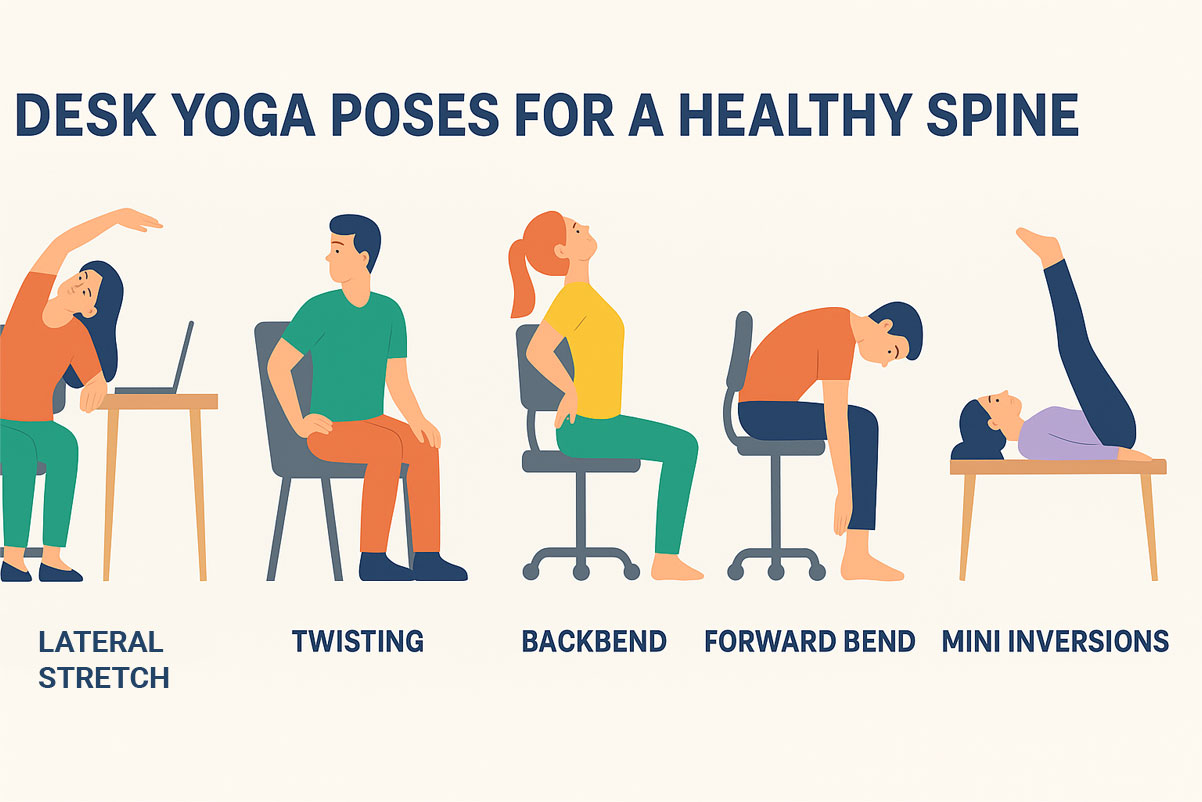
- Micro-Movements at Your Desk: You don’t need to roll out a yoga mat – just integrate these into your workday:
- Lateral Stretch (Side Bending)
Raise one arm and gently lean sideways. Opens the rib cage, relieves shoulder tension, and refreshes the breath. - Twisting (Seated Spinal Twist)
Place one hand on your chair’s backrest and gently twist. Keeps the spine supple, aids digestion, and reduces stiffness. - Backbend (Desk Stretch)
Place palms on your lower back and push hips slightly forward, lifting the chest. Counters slouching and improves posture. - Forward Bend (Seated or Standing)
Gently fold forward, letting the head and arms hang. Relieves lower back tension and calms the mind. - Mini Inversions (Legs on Wall or Desk)
Take 2 minutes to elevate your legs — even resting them on a chair helps drain fatigue and improve circulation.
- Strengthen the Core: Simple chair-based exercises like seated knee lifts or gentle plank variations at home keep the spine supported.
- Stretch After Work: End the day with 5-10 minutes of yoga stretches to release stiffness accumulated during office hours.
The Healing Side
If you already experience back pain:
- Go slow: practice gentle movements, not aggressive stretches.
- Focus on breath: deep, steady breathing improves spinal relaxation.
- Seek professional guidance: regular corporate yoga sessions can provide safe variations for all fitness levels.
Corporate Wellness Angle
Companies investing in corporate yoga programs see better employee productivity and fewer sick days. Short chair yoga breaks, spine-health workshops, or wellness challenges can make a lasting difference. For HR leaders, promoting spinal health isn’t just about comfort – it’s about sustaining energy, creativity, and focus at work.
The Takeaway
Your spine is your support system – literally and figuratively. Long sitting may strain it, but small, smart movements can keep it strong, flexible, and pain-free.
Remember: Stand, stretch, and breathe. Your back will thank you – and so will your work.