
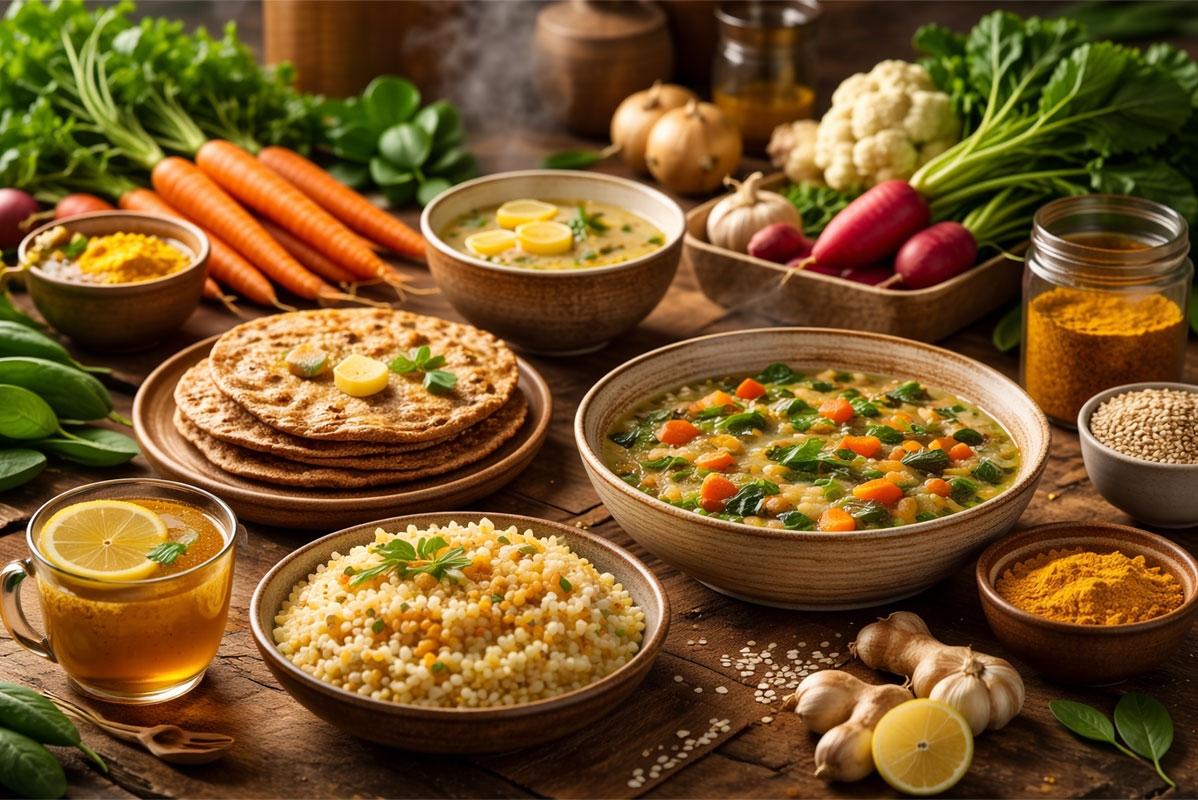
Winter quietly changes the body. Appetite increases, digestion feels stronger, cravings shift toward warm and heavy foods, and the body naturally seeks comfort and nourishment. This is not indulgence — it is seasonal intelligence.
Ayurveda and modern science both agree: winter requires a different way of eating. Eating like summer in winter weakens digestion, immunity, joints, and energy.
Why Winter Demands Different Food
In winter:
- Cold constricts circulation
- Dry air increases stiffness and dryness
- Immunity needs strengthening
- The body burns more calories to stay warm
Modern science calls this thermogenesis.
Ayurveda calls it strong Agni (digestive fire).
Ayurvedic wisdom
“अग्निर्हि प्रधानम् शरीरिणां।”
Agnir hi pradhānam śarīriṇām
Digestive fire is the most important force sustaining the body.
When Agni is strong, the body can digest heavier, richer, more nourishing foods — if chosen wisely.
Winter Hunger Is Not a Problem
Many people feel guilty about eating more in winter. Ayurveda reassures us:
Hunger increasing in winter is natural.
What goes wrong?
Not eating wrong quantity — but eating wrong quality.
Winter requires:
- Warmth
- Oiliness
- Stability
- Nourishment
Not cold salads, protein shakes, or iced drinks.
What to Eat in Winter (Ayurveda + Science)
- Warm, Cooked Foods
Cooked food supports digestion and warmth.
Best choices:
- Vegetable soups
- Khichdi
- Steamed or sautéed vegetables
- Dal, chana, rajma
- Warm porridges
Raw food is heavy for digestion in winter and increases gas and bloating.
- Healthy Fats — Essential, Not Optional
Winter dryness affects joints, skin, nerves, and mood.
Ayurveda strongly supports snigdha ahara (unctuous food).
Best winter fats:
- Ghee
- Sesame oil
- Mustard oil
- Almonds, walnuts
- Til (sesame seeds)
These:
- Lubricate joints
- Improve digestion
- Support immunity
- Reduce Vata dryness
- Seasonal Winter Vegetables
Nature provides what the body needs.
Best winter vegetables:
- Methi
- Sarson
- Bathua
- Spinach
- Gajar
- Mooli
- Drumstick leaves
These are:
- Rich in iron and minerals
- Liver-supportive
- Immunity-building
Eating seasonal vegetables is Ayurveda’s simplest nutrition rule.
- Winter Fruits for Immunity
Fruits should support digestion and immunity.
Best choices:
- Amla
- Guava
- Orange, kinnow
- Sweet lime
- Pomegranate
Eat fruits during the day, not late evening.
- Spices That Warm from Inside
Small quantities make a big difference.
Best winter spices:
- Ginger
- Black pepper
- Cinnamon
- Cloves
- Turmeric
They:
- Improve circulation
- Prevent colds
- Support digestion
- Reduce mucus
What to Avoid in Winter
Cold & Raw Foods
- Cold drinks
- Ice cream
- Raw salads
- Refrigerated food
They weaken Agni and increase congestion.
Eating Late at Night
Late dinners create:
- Mucus
- Heavy sleep
- Morning lethargy
Winter digestion is strong during the day, not late night.
Excess Sugar & Fried Food
Occasional treats are fine — daily indulgence is not.
Too much sugar:
- Weakens immunity
- Increases inflammation
- Creates lethargy
Yoga’s Role in Winter Digestion
Food alone is not enough.
Movement ensures digestion and circulation.
Yogic insight
“शरीरस्य स्थैर्यं च लघुत्वं च उत्पद्यते।”
Yoga brings stability and lightness to the body.
Helpful winter practices:
- Gentle Surya Namaskar
- Twists (for digestion)
- Slow walking after meals
- Deep breathing
Movement prevents heaviness from settling.
How to Eat in Winter (Very Important)
Timing matters more than quantity.
Best practices:
- Eat warm breakfast
- Heaviest meal at lunch
- Light, early dinner
- Sip warm water through the day
Avoid skipping meals — winter fasting without guidance weakens immunity.
Winter Sleep & Food Connection
Heavy food + late eating = dull mornings.
Correct winter food + early dinner = deep, restorative sleep.
Ayurveda connects digestion directly with sleep quality.
The Takeaway
Winter is not a season to diet —
it is a season to nourish wisely.
When food is:
- Warm
- Cooked
- Seasonal
- Slightly oily
- Eaten on time
The body responds with:
- Strong digestion
- Better immunity
- Flexible joints
- Clear mind
- Steady energy
Winter teaches us a simple rule:
Eat warm.
Eat seasonal.
Eat on time.
Eat with awareness.
When you eat with the season, health follows naturally.