In today’s world, “superfood” has become a buzzword. Marketers package certain fruits, seeds, or powders as miracle cures. But let’s be clear: there is no such thing as a single superfood that can meet all your nutritional needs.
Good health is built not on one magic ingredient but on a balanced, diverse diet that nourishes body, mind, and spirit. Ayurveda and modern science both remind us that synergy matters more than singularity.
Ayurveda on the Foundation of Health
Ayurveda, the 5,000-year-old science of life, views food as the first medicine. The Bhagavad Gītā (Chapter 17, Verse 8) emphasizes the role of Sāttvik āhāra (pure, balanced food):
आयुः सत्त्वबलारोग्यसुखप्रीतिविवर्धनाः ।
रस्याः स्निग्धाः स्थिरा हृद्याः आहाराः सात्त्विकप्रियाः ॥
“Foods that promote longevity, vitality, strength, health, happiness, and satisfaction are juicy, naturally unctuous, stable, and pleasing to the heart. Such foods are dear to those of a sattvik nature.”
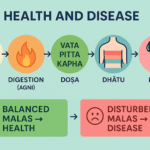
Ayurveda defines health not just by the absence of disease but by balance:
- Doṣas (Vata, Pitta, Kapha) in harmony
- Agni (digestive fire) functioning well
- Dhātus (tissues) nourished
- Malas (wastes) eliminated properly
- Mind, senses, and spirit in contentment
This holistic perspective cautions against chasing “miracle foods.” Instead, it favors consistency, balance, and mindful choices.
Millets: Ancient “Superfoods” of India
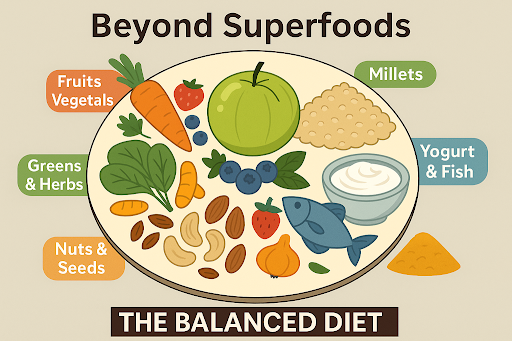
Long before quinoa and chia became popular in the West, India had its own nutrient-dense grains: millets. Mentioned in both Ayurvedic texts and modern nutritional science, millets are:
- Non-glutinous and easy to digest
- Rich in fiber, protein, and minerals
- Low glycemic, preventing sugar spikes
- Satvik and sustaining, keeping hunger at bay
Some traditional varieties include:
- Jhangora (Barnyard Millet)
- Mandua / Ragi (Finger Millet)
- Barri / Cheena (Proso Millet)
- Bajra (Pearl Millet)
- Jowar (Sorghum)
- Kangani (Foxtail Millet)
Replacing refined grains like polished rice and wheat with millets can support digestion, reduce fat accumulation, and enhance energy balance.
Foods That Truly Nourish
While no single food is “super,” certain foods are undeniably nutrient powerhouses. Ayurveda and science both recognize their role in disease prevention and vitality:
Amla (Indian Gooseberry)
- Revered in Ayurveda as “Matr āhāra” (mother-like food)
- Richest natural source of Vitamin C
- Balances all three doṣas
- Boosts immunity, slows aging, improves metabolism, supports eye and heart health
Best consumed shredded fresh with honey
Berries
- Rich in antioxidants, fiber, and phytonutrients
- Support heart health and reduce inflammation
- Scientifically proven to lower blood sugar and cholesterol
Nuts & Dry Fruits
- Almonds, walnuts, cashews, dates, and figs provide protein, omega-3s, and essential minerals
- Beneficial for brain, bones, muscles, nerves, and skin
Leafy Greens & Vegetables
- Spinach, broccoli, and drumstick leaves supply iron, calcium, and antioxidants
- Promote detoxification and tissue repair
Yogurt, Milk, & Fish
- Excellent protein sources
- Support digestion (yogurt with probiotics), muscle repair, and cardiovascular health
Medicinal Foods
- Turmeric (Haldi): Anti-inflammatory and antioxidant
- Garlic (especially Himalayan/Kashmiri ek-kali lahsun): Cardioprotective, immune-boosting
- Spirulina & Wheatgrass: Nutrient-dense, detoxifying
- Ashwagandha & Safed Musli: Adaptogens for stress resilience and vitality
The Ayurvedic Caution: Balance Above All
Charaka Saṃhitā reminds us:
“सर्वे रोगाः मलाश्रयाः।”
“All diseases are rooted in the improper state of body wastes.”
Too much of even a good thing can disturb the body’s balance. Overeating almonds, turmeric, or even Amla can upset digestion and create imbalance. The key is moderation, seasonal alignment, and personalization according to one’s doṣa and lifestyle.
The Modern Scientific View
Nutrition science confirms what Ayurveda always taught:
- Variety ensures micronutrient sufficiency
- Fiber-rich whole foods regulate metabolism
- Antioxidants reduce oxidative stress
- Omega-3s, probiotics, and polyphenols reduce chronic disease risk
Superfood marketing often exaggerates isolated studies. But long-term health depends on patterns of eating, not one miracle ingredient.
Conclusion: The Real “Superfood” Is Balance
There is no food that can carry the burden of your entire health. Amla alone cannot keep you healthy. Nor can spirulina, turmeric, or quinoa.
But when you combine fruits, vegetables, grains, nuts, dairy, and medicinal herbs mindfully — in tune with nature and your constitution — your diet itself becomes super.
Ayurveda, Yoga, and modern nutrition all agree: balance is the greatest superfood.