Today, protein has become the new obsession.
Everyone is suddenly worried:
- “Am I getting enough protein?”
- “Should I add whey?”
- “Is dal enough?”
- “Vegetarians can’t complete protein, right?”
Social media has turned protein into a miracle nutrient — as if the body runs on protein alone.
But Ayurveda reminds us of a timeless truth:
Excess is as harmful as deficiency.
Ayurveda’s First Rule: Balance, Not Obsession
Charaka Samhita clearly states:
“युक्ताहारविहारस्य युक्तचेष्टस्य कर्मसु।”
(Charaka Saṁhitā)
A person who eats in moderation, moves wisely, and lives in balance remains healthy.
Ayurveda never isolated nutrients like protein, carbs, or fats.
It focused on:
- Agni (digestion)
- Dhatu nourishment
- Assimilation, not consumption
Protein is useful only if your digestion can process it.
The Modern Protein Madness
Today we see:
- Protein powders in every kitchen
- Double scoops after light workouts
- High-protein diets with weak digestion
- Teenagers worrying more about protein than posture or sleep
Modern science agrees:
- Excess protein strains kidneys
- Increases acid load
- Can worsen gut issues if digestion is weak
- Leads to dehydration and mineral loss when overdone
More protein ≠ more strength
Digested protein = strength
Too Little Protein: The Other Extreme
Low protein intake can cause:
- Muscle weakness
- Poor immunity
- Hair fall
- Slow recovery
- Fatigue
Ayurveda links this to poor nourishment of Mamsa Dhatu (muscle tissue).
But here’s the catch:
Many people eat enough protein, yet still feel weak.
Why?
Because Agni is weak.
Agni Matters More Than Protein Quantity
Charaka says:
“अग्निर्हि प्रधानम् शरीरिणाम्।”
Agni is the most important factor sustaining life.
If digestion is weak:
- Protein is not absorbed
- It ferments → gas, bloating
- Creates Ama (toxins)
- Causes heaviness, acne, lethargy
Fix digestion first.
Protein will automatically start working.
Protein Myths — Busted
Myth 1: Vegetarians Can’t Get Enough Protein
Truth:
India has nourished generations of strong yogis, farmers, and warriors on vegetarian diets.
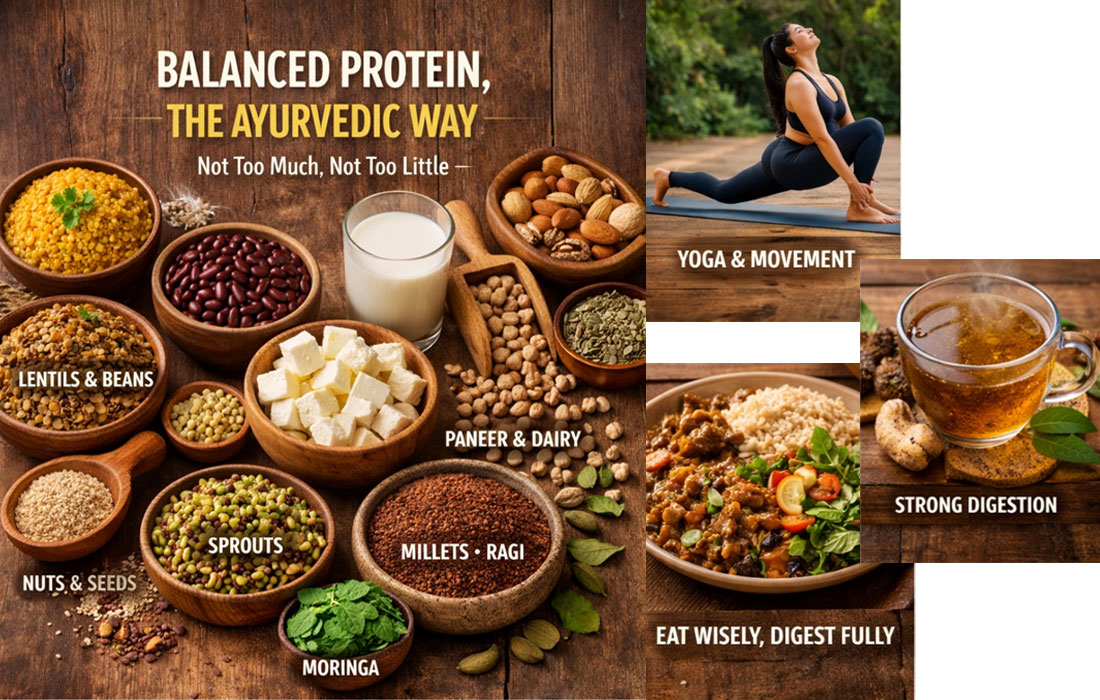
Protein is present in:
- Lentils
- Pulses
- Milk
- Curd
- Paneer
- Nuts
- Seeds
- Millets
Combination + digestion = complete nutrition.
Myth 2: Whey Protein Is Mandatory
Truth:
Whey is not wrong, but:
- Not essential for everyone
- Not suitable for weak digestion
- Not meant to replace food
Ayurveda prefers food first, supplements only when required.
Myth 3: More Protein = More Muscle
Truth:
Muscle grows from:
- Proper digestion
- Movement
- Rest
- Hormonal balance
- Nervous system health
Not just protein shakes.
Best Vegetarian Protein Sources (Ayurveda-Friendly)
Lentils & Pulses
- Moong dal (lightest, best)
- Masoor dal
- Chana
- Rajma (well-soaked & cooked)
Tip:
Add cumin, ginger, hing → improves digestion.
Dairy (If Tolerated)
- Milk
- Paneer
- Curd (only daytime)
Ayurveda considers milk a complete food, not just protein.
Nuts & Seeds
- Almonds
- Walnuts
- Peanuts
- Sesame seeds
- Pumpkin seeds
Soak nuts → easier digestion.
Millets
- Ragi (excellent for muscles & bones)
- Bajra
- Jowar
Protein + minerals + fibre.
Ancient Protein Powerhouses
- Moringa leaves
- Curry leaves
- Sprouts (in moderation)
How Much Protein Is Enough?
Modern science suggests:
- 0.8–1.2 g/kg body weight (for most people)
Ayurveda says:
Eat according to digestion, not calculation.
Signs you’re eating the right amount:
- Lightness after meals
- No bloating
- Good energy
- Stable appetite
- Clear bowel movements
Protein Without Movement Is a Waste
Protein without movement turns into:
- Fat
- Toxins
- Sluggishness
Yoga ensures:
- Proper utilisation
- Muscle nourishment
- Circulation to tissues
Best Yogic Practices for Protein Utilisation:
- Surya Namaskar
- Squats & lunges
- Vajrasana after meals
- Twists for digestion
- Pranayama (especially deep breathing)
Simple Daily Protein Wisdom
✔ Eat protein with warm food
✔ Chew well
✔ Avoid cold drinks with protein meals
✔ Don’t overload dinner with heavy protein
✔ Respect digestion more than trends
A Beautiful Ayurvedic Reminder
“नात्यश्नतः नात्यनश्नतः।”
Neither overeating nor undereating is healthy.
The Takeaway
Protein is important.
But obsession is unhealthy.
Too little protein weakens you.
Too much protein burdens you.
Health lies in:
- Balanced eating
- Strong digestion
- Regular movement
- Calm nervous system
Eat wisely. Digest fully. Move daily.
Your body already knows how to build strength.