
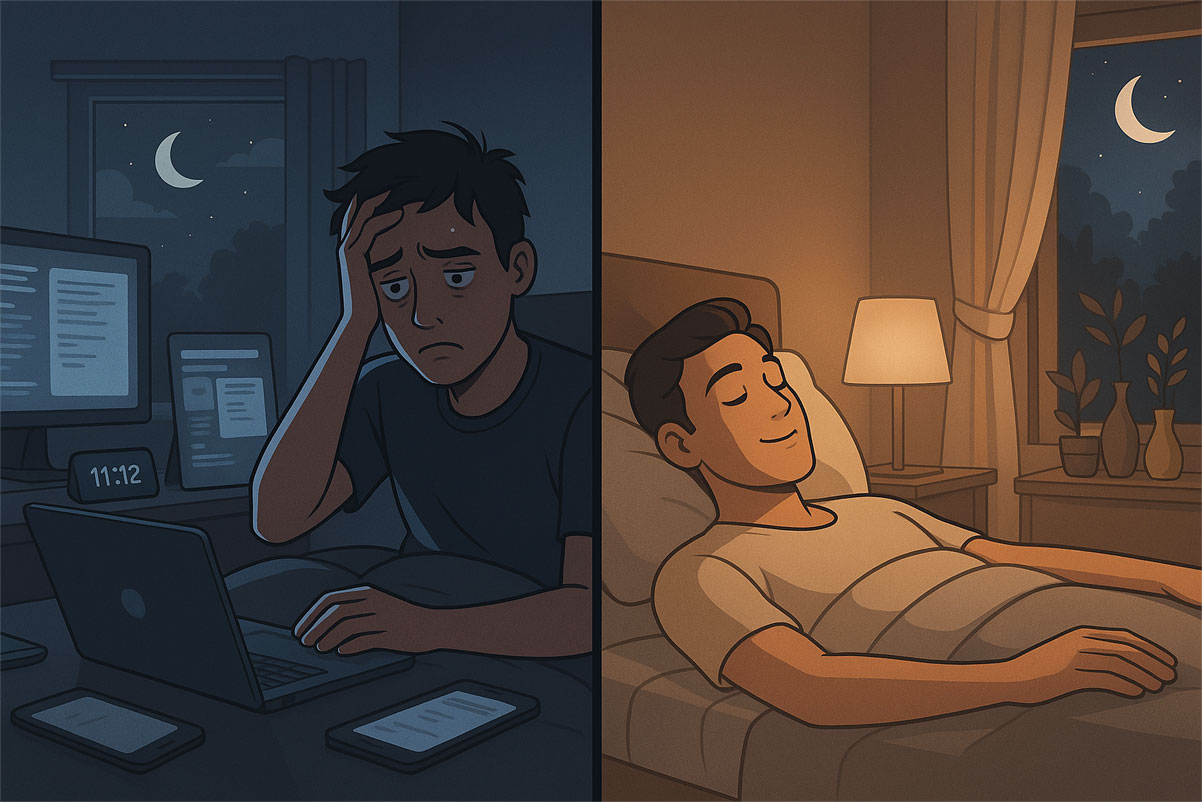
Most of us know that food and exercise are essential for health. But there is a third pillar — often ignored in the rush of modern life — and that is sleep (Nidra).
In Ayurveda, sleep is not just rest. It is one of the three upastambhas (pillars) of life, alongside Ahara (food) and Brahmacharya (balanced lifestyle). Without quality sleep, even the best diet and exercise cannot maintain health.
Ayurveda on sleep
The Charaka Saṃhitā emphasizes:
“आहारं निद्रां ब्रह्मचर्यं च युक्तं आरोग्यं कारणम्।”
(Caraka Saṃhitā, Sūtrasthāna 11/35)
Food, sleep and disciplined lifestyle are the three causes of health and longevity.
Another verse states:
“निद्रालाभे क्रियाः सर्वाः विफलाः स्युः।”
(Caraka Saṃhitā, Sūtrasthāna)
Without proper sleep, all other health efforts fail.
Ayurveda recognizes Nidra as vital for:
- Restoring tissues (dhatus)
- Balancing doshas (especially Vata)
- Calming the mind and senses
- Supporting immunity and digestion
Why professionals sacrifice sleep
In the corporate world, sleep is often the first thing people give up to “get more done.”
- Deadlines and Workload: Late-night presentations, early calls.
- Screens and Notifications: Phones, emails, and social media keep the brain active.
- Stress and Anxiety: Racing thoughts delay rest.
- Erratic Lifestyles: Late meals, caffeine, and irregular schedules disrupt the body’s rhythm.
This sacrifice has a cost:
- Poor immunity > frequent illness.
- Reduced creativity and problem-solving.
- Higher stress and irritability.
- Long-term risks: diabetes, hypertension, heart disease, and depression.
Yogic practices for better sleep
Yoga and meditation provide tools to restore natural sleep:
- Yoga Nidra (Yogic Sleep): A guided deep relaxation technique that brings the body to a sleep-like state while the mind remains aware. Just 20 minutes of Yoga Nidra can feel as refreshing as hours of sleep.
- Bhramari Pranayama (Humming Bee Breath): Calms the nervous system and reduces mental chatter before bed.
- Shavasana (Corpse Pose): Simple stillness on the mat releases tension from muscles.
- Viparita Karani (Legs-up-the-wall): Improves circulation, reduces fatigue, and signals the body to relax.
Lifestyle & Ayurvedic Recommendations
- Regular Bedtime: Align sleep with natural circadian rhythm — ideally asleep by 10 PM.
- Digital Detox: Avoid screens 1 hour before sleep; blue light disturbs melatonin.
- Evening Diet: Eat dinner early (6–7 PM) and light; leave 3 hours gap before bed.
- Herbal Supports:
- Triphala – balances digestion, taken at night.
- Ashwagandha – reduces stress and supports restful sleep.
- Warm milk with nutmeg or turmeric – a classic Ayurvedic sleep aid.
- Mind Hygiene: Journaling, gratitude practice, or reading calming texts before bed.
Corporate strategies for sleep health
Organizations can promote sleep as part of wellness:
- Flexible Timings: Align work schedules to human energy cycles.
- Digital Detox Policies: Restrict late-night emails and work messages.
- Workshops on Sleep Hygiene: Teach employees practices like Yoga Nidra and breathwork.
- Nap Pods or Rest Corners: Encourage short power-naps during long shifts.
Sleep hygiene checklist
Do’s for Better Sleep
- Fix a Bedtime: Sleep and wake up at the same time every day (ideally 10 PM-6 AM).
- Early Dinner: Eat light and finish dinner by 6-7 PM. Keep at least 3 hours gap before sleep.
- Herbal Aids: Try warm milk with nutmeg/turmeric, or calming teas like chamomile, tulsi, or fennel.
- Wind-Down Ritual: Practice 10 minutes of Yoga Nidra, Shavasana or Bhramari Pranayama.
- Calming Routine: Read, journal, or reflect on gratitude before bed.
- Ayurvedic Supports: Triphala for digestion, Ashwagandha for stress relief.
- Sleep Environment: Keep bedroom cool, dark, and quiet.
Dont’s for Better Sleep
- No Screens: Avoid phones, laptops, and TV at least 1 hour before sleep.
- Avoid Stimulants: Reduce tea, coffee, alcohol, and smoking in the evening.
- Skip Heavy Meals: No fried, processed or late-night snacks.
- Don’t Sleep Stressed: Release work worries with journaling, prayer, or mindful breathing.
- Don’t Stay in Bed Awake: If you can’t sleep, get up, read something light, then return.
The Takeaway
Sleep is not laziness. It is a biological necessity – a time when the body heals, the mind resets and creativity flourishes.
Ayurveda calls sleep a pillar of health for good reason: without it, food and exercise lose their power.
So tonight, give yourself permission to rest. Breathe deeply, disconnect from screens, and surrender to Nidra. Because in sleep, we heal.