
Diabetes is often called a “lifestyle disease” — and for good reason. The rise of sedentary jobs, long working hours, irregular eating habits, and stress-heavy corporate environments has made diabetes a common condition among working professionals.
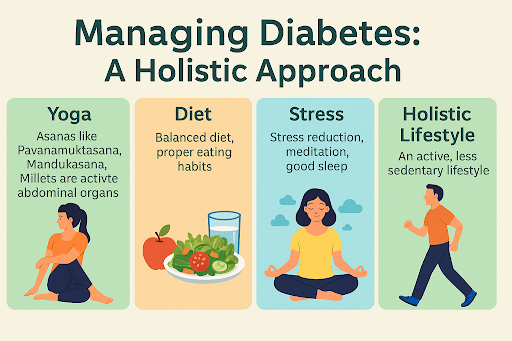
While modern medicine focuses on controlling blood sugar with medications, Ayurveda and Yoga emphasize a holistic approach — combining physical activity, balanced diet, stress management, and good sleep. Together, these form the foundation of not just managing diabetes, but also preventing it and living a fuller life.
Why a Holistic Approach is Essential
Managing diabetes is not about quick fixes or just reducing sugar intake. It requires alignment across body, mind, and lifestyle.
- Exercise improves insulin sensitivity and keeps the body active.
- Balanced Diet stabilizes blood sugar and prevents spikes.
- Stress Management controls hormones that influence glucose levels.
- Good Sleep restores the body and reduces cravings.
- Yoga uniquely supports all of the above by pressing, twisting, and activating abdominal organs, which improves their function and restores balance.
Yoga for Diabetes
Yoga has proven benefits in diabetes care because it massages the abdominal organs — pancreas, liver, stomach, and intestines — making them more efficient. The principle is simple: press, twist, and activate. These asanas not only support diabetes but also help with other lifestyle issues like acidity, constipation, fatty liver, and indigestion.
- Pressing the Abdomen
- Pawanmuktasana (Wind-Relieving Pose): Releases trapped air, improves digestion, relieves bloating, and aids elimination.
- Mandukasana (Frog Pose): Especially recommended for diabetes as it applies pressure to the pancreas, stimulating better insulin secretion.
- Twisting the Abdomen
- Vakrasana (Simple Twist): Gentle twist, stimulates abdominal organs, reduces stiffness from long hours of sitting.
- Ardha Matsyendrasana (Half Spinal Twist): A deeper twist that massages the pancreas and liver, improving metabolism.
- Udarakarshanasana (Abdominal Stretch Pose): Activates intestines, relieves constipation and gastric issues.
- Abdominal Lock (Kriya)
- Uddiyana Bandha: After exhalation, suck in the stomach and hold. Strengthens abdominal walls, activates digestion, and detoxifies.
- Agnisar Kriya: Rapidly contracting and releasing the abdomen while holding breath out. Improves pancreatic health and stimulates Agni (digestive fire).
These should be learned gradually, preferably under guidance, especially for beginners or those with health conditions.
The Role of Diet in Managing Diabetes
Ayurveda describes diabetes (Madhumeha) as a disorder of metabolism linked to improper digestion, weak Agni, and imbalance in doshas. Food is therefore both cause and cure.
Correct Foods for Diabetes Management
- Millets & Whole Grains: Ragi, Jowar, Bajra, and Foxtail Millet — non-glutinous, low-glycemic, and sustaining.
- Vegetables: Leafy greens (spinach, methi, drumstick leaves), gourds, broccoli, carrots.
- Fruits (in moderation): Amla (Indian Gooseberry), guava, papaya, and berries — rich in antioxidants and fiber.
- Proteins: Lentils, beans, sprouts, paneer, yogurt (unsweetened).
- Healthy Fats: Almonds, walnuts, flaxseeds, sunflower seeds, olive oil.
Eating Habits that Matter
- Eat smaller meals more frequently instead of large, heavy meals.
- Maintain fixed timings to align with circadian rhythm.
- Avoid processed foods, refined sugar, fried snacks, and late-night eating.
- Drink enough water and avoid excess caffeine.
Stress, Sleep, and Diabetes
Corporate work culture often breeds stress and poor sleep — two silent drivers of diabetes.
- Stress & Blood Sugar: Stress hormones (cortisol, adrenaline) increase blood sugar and worsen insulin resistance. Chronic stress can also lead to emotional eating and poor lifestyle choices.
- Managing Stress:
- Practice meditation or pranayama (Anulom Vilom, Bhramari).
- Include laughter yoga in daily life.
- Take short walks during office hours to release tension.
- Maintain work-life balance and disconnect from screens after work.
- Sleep Connection: Poor sleep disrupts insulin function and increases appetite. Aim for 7–8 hours of restful sleep daily.
Diabetes and Corporate Lifestyle
Sedentary work and corporate stress are key reasons why diabetes is on the rise among professionals. Common patterns include:
- Long hours at a desk with minimal movement.
- Irregular meals or skipped lunches due to deadlines.
- Quick, unhealthy snacks or overreliance on coffee.
- Stress-induced cravings and poor sleep cycles.
Practical Corporate Wellness Tips
- Use standing desks or take walking meetings.
- Stretch or do chair yoga for 5 minutes every hour.
- Replace vending machine snacks with nuts, fruits, or roasted grains.
- Practice deep breathing before stressful presentations.
- Encourage corporate wellness programs with yoga sessions.
Conclusion
Diabetes is not just a health condition — it’s a wake-up call to change one’s lifestyle. Medications help control blood sugar, but the long-term solution lies in holistic care:
- Yoga to press, twist, and activate abdominal organs.
- Balanced Diet rich in millets, greens, and whole foods.
- Stress Management & Sleep to balance hormones.
- Movement during work hours to fight sedentary patterns.
For corporate professionals, these small but consistent changes can make a big difference. When health is prioritized, productivity, creativity, and overall happiness also rise.
Health is your greatest wealth — managing diabetes holistically ensures you can enjoy both work and life to the fullest.