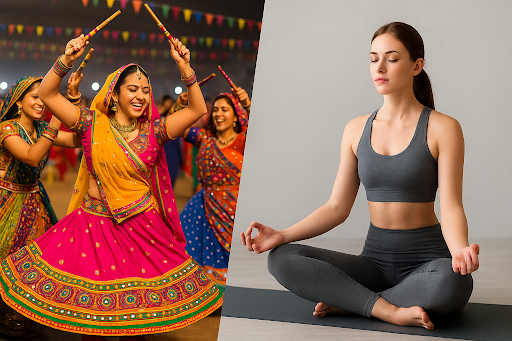
Garba and Dandiya are not just dances — they are celebrations of rhythm, joy, and community. But every year, news reports highlight cases of exhaustion, injuries, and even sudden cardiac issues during the festive season. The reason? Many people jump into hours of high-intensity dancing without preparation, after months of sedentary living.
With a few mindful practices and simple yoga techniques, you can enjoy Garba to the fullest — safely, energetically, and without overstraining your body.
Why Health Risks Rise During Festivals
- Sudden Overexertion
Dancing for hours without warm-up shocks the body, especially if you are not used to regular exercise. - Cardiac Strain
Long periods of vigorous movement in crowded spaces, often after heavy meals, can increase the risk of cardiac events in vulnerable individuals. - Joint & Muscle Injuries
Ankles, knees, and lower back bear the most pressure during fast spins and stomping movements. - Sleep & Hydration Deficit
Late-night festivities, irregular eating, and lack of water further weaken stamina and recovery.
Preparing the Body for Garba & Dandiya
Like an athlete trains before a marathon, preparing for festive dancing ensures safety and stamina.
- Build Stamina Gradually
- Start Early: Even 10–15 minutes of brisk walking or light jogging daily two weeks before Navratri can make a difference.
- Practice Dance Rounds: Rehearse short 10-minute sessions at home to adapt your body to the rhythm.
- Warm Up Before Dancing
- Simple yoga warm-ups like Tadasana (Mountain Pose stretches), Ankle Rotations, Hip Circles, and Shoulder Rolls activate major joints.
- Gentle surya namaskar sequences improve blood circulation and prevent cramps.
- Strengthen the Core & Legs
- Chair Pose (Utkatasana): Builds thigh and core strength to support long hours of standing and spinning.
- Bridge Pose (Setu Bandhasana): Strengthens the back and hips, reducing lower-back strain.
- Calf Raises: Prepare ankles and calves for stomping moves.
- Focus on Breathing & Endurance
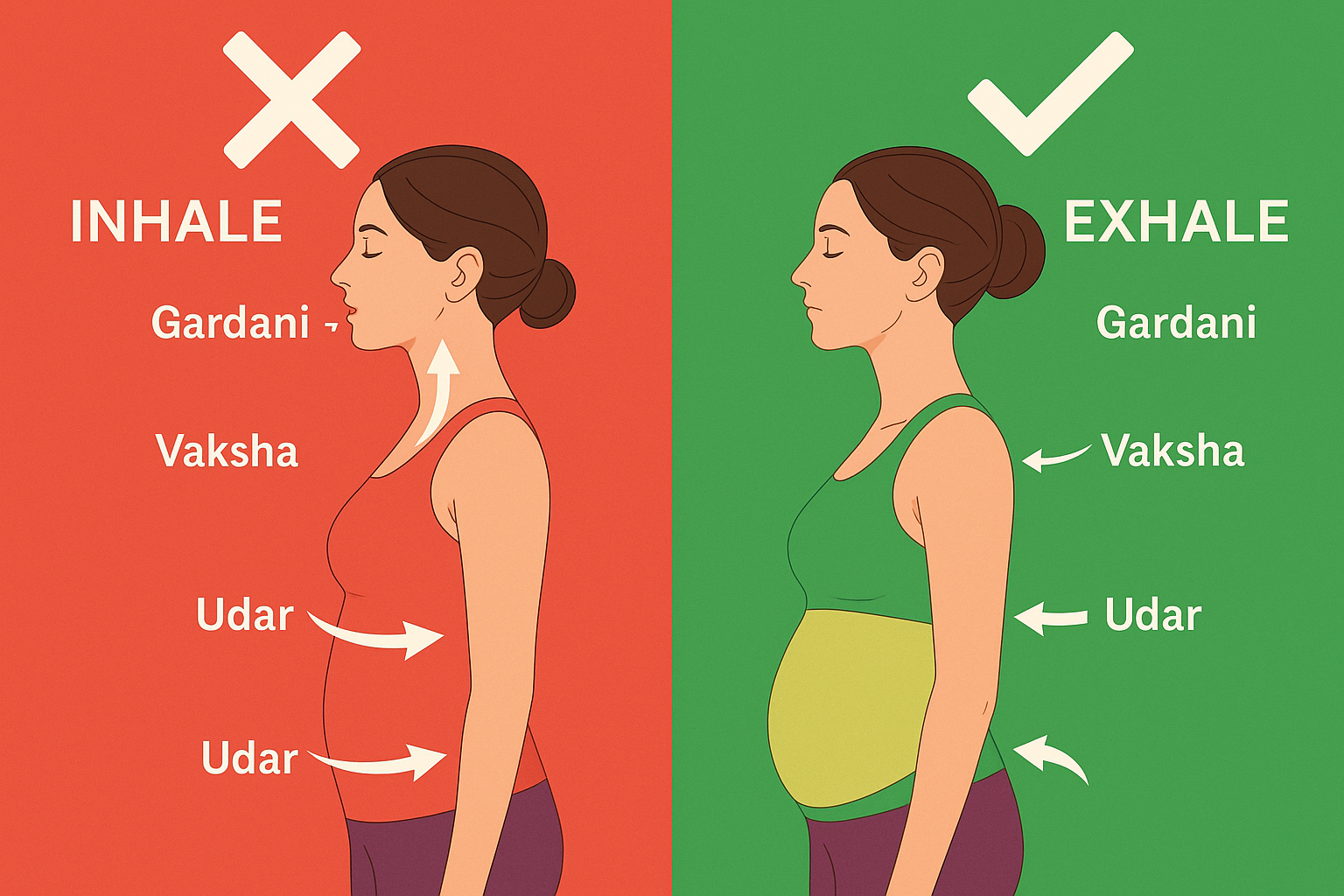
- Kapalabhati & Bhastrika Pranayama: Improve lung capacity and energy.
- Box Breathing (4-4-4-4 count): Calms the heart rate and prevents breathlessness during intense dancing.
Safety Precautions During Dance Nights
- Don’t Dance on a Full Stomach: Wait at least 2 hours after a heavy meal.
- Stay Hydrated: Drink water before and after, but avoid overloading during the dance.
- Listen to Your Body: If you feel dizzy, breathless, or unusually fatigued, pause immediately.
- Wear Comfortable Shoes: Supportive footwear reduces ankle and knee stress.
- Pace Yourself: Take short breaks instead of continuous hours of dancing.
Mindful Movement & Recovery
- Stretch After Dancing: Forward bends, spinal twists, and gentle leg stretches release tension.
- Cool Down with Breathing: A few minutes of Anulom Vilom or Bhramari pranayama calms the nervous system.
- Prioritize Sleep: 7–8 hours of rest helps the body recover and prevents festive fatigue.
Corporate Wellness Connection
Many employees celebrate Navratri together, often at office events. Corporates can promote safety and fun by:
- Hosting pre-Garba yoga sessions to build stamina.
- Organizing laughter yoga or dance-based warmups before festivities.
- Sharing tips on hydration, mindful eating, and safe movement with staff.
The Takeaway
Garba and Dandiya are about joy, rhythm, and togetherness — not exhaustion. With a little preparation, yoga, and mindfulness, you can protect your heart, prevent injuries, and dance through the night with energy.
This Navratri, let your celebration be not just lively, but also safe, balanced, and rejuvenating.